✅ ISO Certified NDT Testing Company in Pune, Maharashtra | Ultrasonic & Magnetic Testing | Call +91-8796634037

Remaining Life Assessment (RLA) in NDT – Complete Guide
Blog post description.
8/23/20252 min read
What is RLA?
Remaining Life Assessment (RLA) is a structured engineering process used to determine the residual life of industrial components that operate under high temperature, pressure, or stress conditions.
It combines Non-Destructive Testing (NDT), material analysis, and design calculations to predict how long a component can safely remain in service before repair or replacement is required.
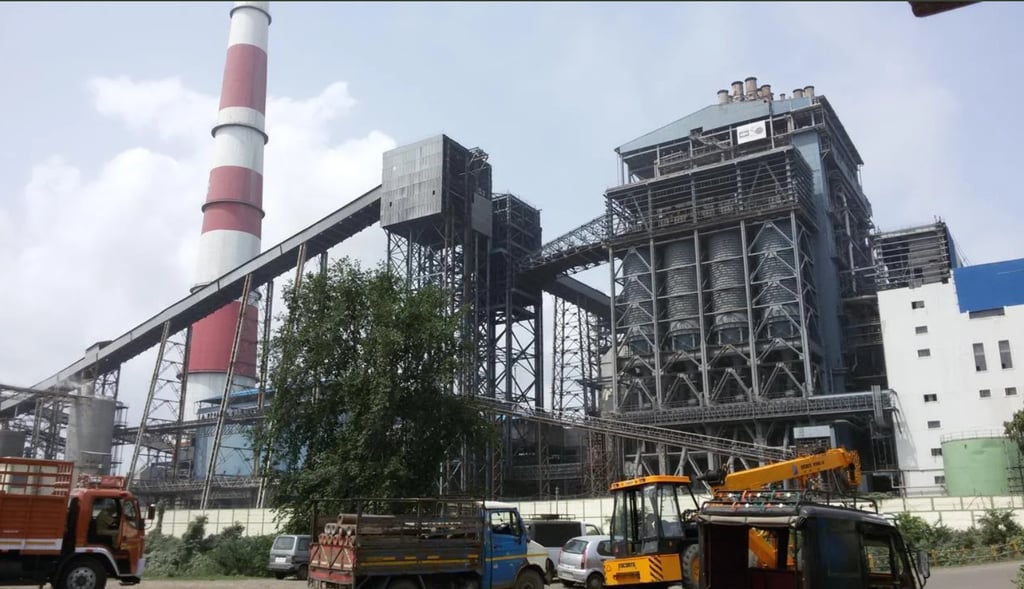
Industries such as power plants, oil & gas, petrochemical, and refineries rely heavily on RLA to ensure safety, reliability, and cost optimization.
Why RLA is Needed?
Components like boilers, turbines, pipelines, and pressure vessels degrade over time due to:
High temperature creep
Fatigue & cyclic loading
Corrosion & erosion
Hydrogen damage & stress corrosion cracking
RLA helps avoid catastrophic failures, ensures plant safety, and allows life extension of expensive assets.
Principle of RLA
RLA is based on:
Condition Monitoring → Detect present damage using NDT.
Degradation Mechanism Study → Identify type of material deterioration.
Stress & Life Prediction → Calculate remaining safe operating life.
Maintenance & Repair Decisions → Repair, replace, or extend service life.
Steps in Remaining Life Assessment
1. Data Collection
Design details, operating history, service conditions, failures.
2. Visual & Dimensional Inspection
Visual Testing (VT), dimensional checks, thickness measurement.
3. NDT Techniques Used in RLA
Ultrasonic Testing (UT): Wall thinning, cracks.
Magnetic Particle Testing (MPT): Surface/subsurface cracks in ferromagnetic materials.
Dye Penetrant Testing (DPT): Surface-breaking cracks.
Radiography (RT): Internal defects.
Replica Metallography: Microstructural analysis of creep and fatigue damage.
Hardness Testing: Material degradation.
Positive Material Identification (PMI): Correct material verification.
4. Creep & Fatigue Evaluation
Metallographic studies (replica technique).
Mechanical property estimation.
5. Engineering Assessment
Stress analysis, design calculations, fracture mechanics.
6. Remaining Life Estimation & Recommendations
Predict service life in years or cycles.
Recommend repair/replacement schedules.
Applications of RLA
Power Plants: Boilers, turbines, piping systems.
Petrochemical & Refineries: Pressure vessels, heat exchangers, reactors.
Oil & Gas: Pipelines, storage tanks.
Steel & Fertilizer Plants: High-temperature furnaces, reformers.
Advantages
Prevents sudden, costly failures.
Extends equipment life safely.
Optimizes maintenance & shutdown schedules.
Ensures compliance with safety regulations.
Reduces capital expenditure by avoiding premature replacement.
Limitations
Requires skilled manpower and advanced NDT tools.
Involves shutdown/downtime for detailed inspection.
Predictions are based on models → not 100% exact.
Costly for small-scale industries.
Standards & Guidelines
API 579-1 / ASME FFS-1 – Fitness-for-Service assessment.
ASME Section VIII & IX – Pressure vessel requirements.
RBI (Risk-Based Inspection) frameworks.
Indian Boiler Regulations (IBR) for power plants in India.
Summary
Remaining Life Assessment (RLA) is a crucial process in industries where safety and reliability are non-negotiable. By combining NDT methods, metallurgical studies, and engineering analysis, RLA helps predict the safe operating life of components, prevent failures, and save millions in unplanned shutdowns and replacements.